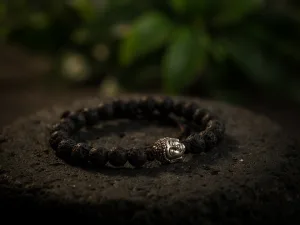
A bracelet you wear every day leads a busy life. It goes through hand-washing and sun cream, gets knocked against desks and car doors, and spends its nights on a bedside table. Stone, silver, copper, wood and cord each respond to that life differently, which is why no single jewellery cleaner suits them all.
Happily, most care comes down to habits rather than special products. This guide goes material by material, with what keeps each one at its best and, in some cases, what lets it age well.
The everyday basics: wearing, wiping and storing
- Last on, first off. Put jewellery on after perfume, lotion, sun cream and hairspray have dried, and take it off before your evening wash. Cosmetics leave films that dull stones, stain wood and weaken elastic.
- Take it off for water and hard work. Pools, hot tubs, the sea, the shower, washing-up, cleaning products and sweaty workouts are hard on nearly every material here. Chlorine is especially hard on silver and can weaken the soldered joins on clasps and links.
- Wipe, then put away. A soft, dry cloth lifts sweat and skin oils before they settle.
- Store pieces apart. Give each one its own pouch or lined compartment, somewhere cool, dry and out of direct sun; a bedroom drawer beats a bathroom shelf. Lay heavy beaded bracelets and pearl strands flat rather than hanging them, so the elastic or thread is not under constant strain.
- Travel light. Wrap pieces separately in soft pouches or a roll-up case and keep them in your hand luggage.
Natural stone: hardness, porosity and gentle cleaning
Gemmologists compare hardness using the Mohs scale, from talc at 1 to diamond at 10. It is a ranking, not an even ruler, and it measures scratch resistance only, so even a hard stone can chip on a tiled floor.
The quartz family, including amethyst, citrine, tiger’s eye and agate, sits at around 7 and copes well with daily wear. Jadeite measures about 6.5 to 7 and nephrite jade 6 to 6.5. Obsidian, a natural volcanic glass, is softer at around 5 to 5.5 and can chip. Turquoise and lapis lazuli fall between 5 and 6, and pearls between 2.5 and 4.5.
Household dust contains fine particles of quartz, so anything softer can slowly lose its polish if dust is rubbed across it. Rinse a dusty stone or use a damp cloth rather than buffing it dry.
Porous, dyed and treated stones
Turquoise, lapis and pearls are porous: they absorb oils, lotions and perfume, and turquoise may darken or turn greenish over time. Many beads are also dyed, waxed or stabilised, a common practice in the trade; alcohol-based products and solvents can lift dye, and heat can affect fillers. If you are unsure whether a stone has been treated, care for it as though it has.
How to clean natural stone
- Hard, untreated stones: warm (not hot) water with a drop of mild washing-up liquid, a soft brush, a quick rinse and a pat dry.
- Porous, dyed or soft stones, pearls and cinnabar: a barely damp soft cloth, then dry. No soaking, no chemicals, no heat.
- Never put treated or porous stones, pearls, or anything strung in an ultrasonic or steam cleaner, and keep bleach, ammonia and acetone away.
- Mind the sun. Prolonged strong light and heat can fade amethyst, so skip the sunny windowsill and the car dashboard.
If you cleanse your stones as part of a practice, choose methods that keep the piece dry, such as incense smoke or moonlight. Salt water is hard on porous stones, metal fittings and elastic alike.
Silver and copper: tarnish, patina and green marks
Sterling silver
Sterling silver, marked 925, is 92.5 per cent silver, with the rest usually copper for strength. Fine silver (999) is softer and less prone to tarnish, though not immune. Tarnish is a thin dark film that forms when silver and copper meet sulphur compounds in the air. Humidity speeds it up, and so do rubber bands, wool and foods such as eggs and onions.
- Light tarnish: a silver polishing cloth is the gentlest fix.
- Everyday grime: warm water with a drop of mild washing-up liquid, then dry thoroughly. Solid silver only, not pieces on cord.
- Avoid toothpaste, baking soda and other abrasive home remedies, which wear the surface over time.
- Engraved pieces: many mantra rings and beads have deliberately darkened recesses that make the lettering readable. Liquid silver dips strip that darkening along with the tarnish, so polish only the raised surfaces.
Store silver in an anti-tarnish pouch, or a lidded box with an anti-tarnish strip, and never wrap it in newspaper. If it meets the sea on holiday, rinse it in fresh water and dry it well.
Copper
Copper changes as you wear it, mellowing from a bright, rosy shine to warm brown, and in damp conditions it can develop green spots. Many people prefer this lived-in patina to a high shine; keeping it is purely a matter of taste.
Copper can also leave a green mark on your skin, from the metal reacting with sweat, moisture, soap or lotion. Dermatologists describe this as harmless, and it washes off with soap and water. To reduce marks, keep your skin and the copper dry and take it off for exercise; on a solid cuff, a thin coat of clear nail varnish on the inner surface helps until it wears away.
To brighten solid copper, rub it gently with lemon juice and a little dissolved salt, then rinse and dry thoroughly. Skip this if stones, cord or wood are attached, and use a dry polishing cloth instead.
Wood, sandalwood and seed beads
Water makes wood swell, and repeated wetting and drying can leave beads pale, dry or cracked, so take wooden bracelets and malas off before washing your hands or showering. If they get wet, pat them dry and let them air-dry away from radiators and direct sun. Perfume and lotion can stain wood and mask its own scent.
Handling, on the other hand, suits them. Many wooden and bodhi seed beads slowly darken and gain a soft sheen as they are worn, and green sandalwood in particular deepens in colour over time. That is the mark of a well-loved piece, not damage.
If beads look dry, put a single drop of a light oil such as jojoba on a soft cloth, rub it over the beads and wipe off the excess. A few times a year is plenty. Oil the cloth, not the bracelet, so nothing soaks into the elastic or cord.
Stretch bracelets, knotted cord and red string
On a stretch bracelet it is the elastic, not the beads, that wears out. Roll it over your hand rather than stretching it wide, and keep it away from water, lotion and perfume. Every few months, look between the beads: gaps that stay open, elastic that looks cloudy or thin, or a bracelet that sits looser than before all mean it is time to restring. A bead shop or jeweller can do this; photograph the bead order first.
Adjustable cord bracelets usually close with a sliding knot: pull the two loose ends to tighten, and ease the band apart to loosen. Adjust it gently and never force a stiff knot. Avoid soaking: repeated wetting can fade and fray cord, and it stays damp against your skin for hours. To freshen one, dab it with a damp cloth and a little mild soap, then let it dry flat. Trim loose fibres with small scissors rather than pulling them.
A cord tied for you at a ceremony is a little different. Many traditions let it wear through rather than replacing it, and have their own ways of retiring it when it does; our guide to the red string bracelet explains them.
Frequently asked questions
Can I shower or swim wearing my bracelet?
It is best not to. Water, soap and chlorine dull stones, weaken elastic and cord, mark wood and speed up tarnish. An occasional splash will not ruin anything, but regular soaking adds up.
Does tarnish mean my silver is not real?
No. Tarnish is ordinary chemistry: sterling silver reacts with sulphur compounds in the air, and fine silver does too, only more slowly. A polishing cloth usually brings back the shine.
Is the green mark from copper jewellery harmful?
Dermatologists describe it as harmless, and it washes off with soap and water. Itching, redness or a rash is different: stop wearing the piece, and speak to a pharmacist or doctor if it does not settle.
How often should I restring a stretch bracelet?
There is no fixed schedule. Check the elastic every few months and restring as soon as you see gaps or looseness, before it snaps.
Looking after a piece you wear every day can become a small ritual of its own: a moment each evening to take it off, wipe it and put it somewhere safe. If you would like something new to care for, browse our sterling silver, copper and sandalwood and wood pieces, or the Red String collection, each with a note on what it traditionally stands for.
Share this article
Shop the meaning
Wear what it means to you
Every piece in our collections is sorted by the intention, symbol and stone it carries, with the meaning explained in plain words.
Keep Reading
Stones & Materials
Stones & Materials